Best Rice Cookers Guide
Roundup · Small-Capacity Rice Cookers

A cooker built for two still comes in two different cup counts.

Small rice cookers are sized two different ways, and the listing title rarely says which one you are reading. Dash, Aroma and GreenLife sell their smallest cookers by cooked volume, so a “6-cup” model holds three cups of raw rice. Zojirushi counts the other way and states the raw number outright, so its compact cookers list three cups uncooked with no cooked figure attached. Misread the label on a cooker this small and you end up with a pot that cannot manage a second bowl, or one with more room than a one- or two-person kitchen will ever use. We compared six small rice cookers — from a one-cup personal cooker to a micom built into a compact body — on what each one actually holds raw, how it controls the cook, and the smallest batch it can manage.

By Ilane Tall6 picks · small-capacity rice cookers comparedResearch-based — no testing lab, no invented scores

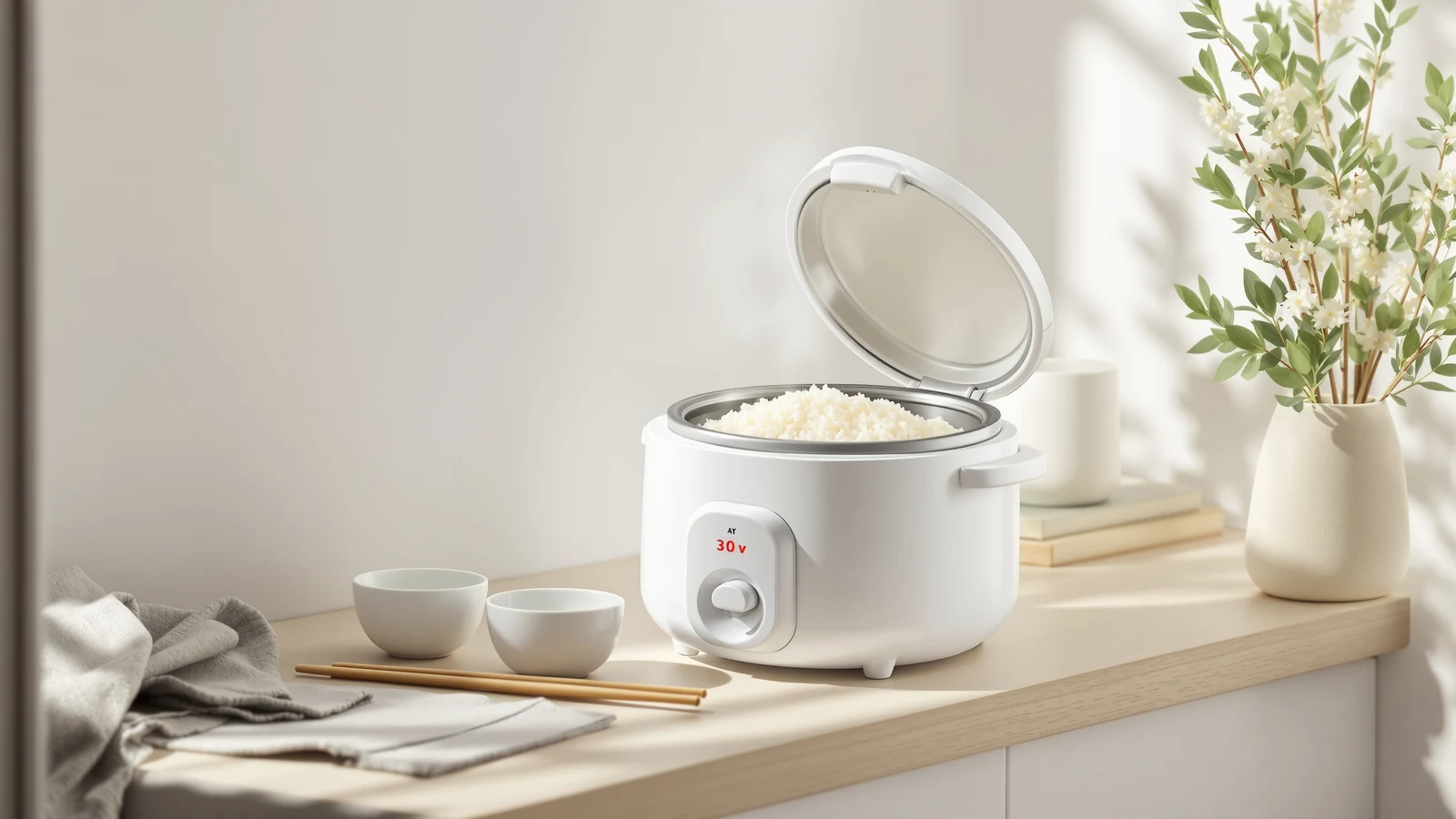
Small white rice cooker with its lid open over a pot of cooked white rice, two small ceramic bowls and wooden chopsticks beside it on a light wood counter

Affiliate disclosure: this guide contains Amazon affiliate links. If you buy through one, we may earn a commission at no extra cost to you — see our privacy policy for details. Updated November 29, 2026. Research-based — we don't run a testing lab.

The pick for two

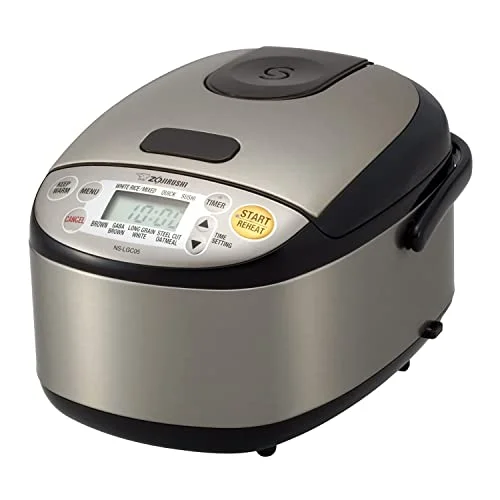
Zojirushi Micom 3-Cup Compact Rice Cooker and Warmer

Most cookers this size are built around a single on/off switch. This one puts a Zojirushi micom — a microchip that adjusts heat through soaking, cooking and resting — inside a 3-cup body, and Zojirushi says it can cook as little as half a cup of rice or oats at a time, a minimum batch size few makers in this category publish at all. The menus go beyond plain white rice: a steel-cut oatmeal setting runs a shorter cycle than regular porridge, and a GABA brown-rice setting holds the grain at roughly 104°F for two hours before cooking begins, meant to develop more of the compound before the heat starts.

It is also the one in this group built to live on a counter long-term rather than get put away between uses. The stainless steel body has a retractable cord, and Zojirushi markets the whole unit as easy to carry between a kitchen and a dorm room or office. The honest limits: the listing gives no wattage, no dimensions and no full menu count, and three cups raw — about six cooked, going by the doubling this category uses — is the ceiling. For two people who eat rice most days and want a little more control than a switch gives you, it is the one to start with.

3 cups uncooked·Micom·Cooks from ½ cup·Retractable cord
Zojirushi Micom 3-cup compact rice cooker in stainless black
Price
$142.46
Check price on Amazon →

Prices change. We refresh them, but Amazon is the authority.

Before you buy

Four things decide a small rice cooker. Raw versus cooked cups is the one that trips people up first.

Raw cups vs. cooked cups at the small end

The confusion that affects full-size rice cookers gets worse at the small end, because the numbers are smaller and the gap feels bigger in practice. Dash states both figures on the same listing: one cup uncooked, two cups cooked. GreenLife, Aroma’s 1.5-quart cooker and CUCKOO’s micom all use the same pattern — three cups uncooked, six cups cooked — which is the standard doubling this whole category runs on. Zojirushi’s two 3-cup cookers break from that pattern and state only the raw number, with no cooked figure on the listing at all. Read the raw number first; it is the one that tells you how much dry rice the pot will actually hold before water goes in.

How much rice one or two people really cook

A single serving of cooked rice, as a side next to the rest of the plate, commonly runs around half a cup to a cup depending on appetite. Two people eating rice as a side at one meal typically land near a cup of cooked rice between them — roughly half a raw cup before it doubles. Two people treating rice as the main starch at dinner, with maybe a second helping or next-day leftovers, is closer to two or three cups cooked, or one to one-and-a-half cups raw. That range is exactly why the cookers in this guide top out at three cups raw: it covers a real two-person dinner with room for leftovers, without the four-, six- or ten-cup capacity built for a bigger household.

One switch or micom in a 3-cup body

Capacity is not the only thing that shrinks on a small cooker; so, usually, does the control. GreenLife says so directly on the box — “One-Switch Design” — and Aroma’s 1.5-quart cooker and Dash’s mini carry no micom or fuzzy-logic language at all, which puts them in the same basic cook-and-warm class: the heat runs until the water is gone, then a thermostat trips it to keep-warm. Zojirushi’s plain 3-Cup Rice Cooker/Steamer carries no “micom” branding either, which points to the simpler end of that maker’s own range. CUCKOO and Zojirushi’s compact cooker go the other way, putting a microchip-controlled, fuzzy-logic cook inside the same small footprint — CUCKOO lists nine cooking modes and a quick white-rice cycle it times at 26 to 28 minutes. The body size is identical; what you are paying for is what happens inside it.

Minimum batches: why half a cup matters

A pot built around three cups raw does not automatically scale down. Less rice means less water and less steam circulating, and a cooker tuned for a fuller pot can struggle to finish a quarter- or half-cup batch evenly. That is what makes Zojirushi’s published half-cup minimum notable — it is a figure almost no other maker in this comparison states at all. CUCKOO’s quick mode matters for the same reason: a 26-to-28-minute cycle is more useful to someone cooking small amounts once or twice a day than to someone running one big weekly batch. Dash sidesteps the question entirely — one cup raw is both its floor and its ceiling, so there is no minimum to worry about. For the other four, treat the three-cup raw figure as a ceiling the listing supports, not a guarantee of how evenly the pot handles a half-cup dinner for one.

Side by side

The six, compared

Rice cookerBest forRawCookedControlPriceGet it
Zojirushi Micom 3-Cup Two people, daily rice 3 cups Not listed Micom $142.46 Get it
CUCKOO Micom Fuzzy Logic Value micom 3 cups 6 cups Micom, 9 modes $88.82 Get it
Zojirushi 3-Cup Rice Cooker/Steamer Basic switch, full 3-cup size 3 cups Not listed Not listed $53.99 Get it
GreenLife Rice Cooker One-switch value 3 cups 6 cups One-Switch $27.32 Get it
Aroma 1.5Qt ARC-363NGB Budget 3-cup 3 cups 6 cups Not listed $24.99 Get it
Dash Mini 2-Cup One person 1 cup 2 cups One switch $19.99 Get it
The six

Our picks, and who each one is for

01Best overall

Zojirushi Micom 3-Cup Compact Rice Cooker and Warmer

Best for two people who eat rice most days

3 cups uncooked·Micom·Cooks from ½ cup·Retractable cord

The only cooker in this group that pairs a microchip-controlled cook with a body sized for one or two people. Zojirushi’s fuzzy logic adjusts heat through soaking, cooking and resting instead of just running until the water disappears, and the maker states it can handle as little as half a cup of rice or oats — a minimum few small cookers publish. The steel-cut oatmeal setting runs a shorter cycle than regular porridge, and the GABA brown-rice setting holds the grain warm before cooking to develop more of the compound, according to Zojirushi. The retractable cord and stainless body are built for a cooker that moves between counters. The trade-off: no wattage, dimensions or full menu list on the listing, and three cups raw is the hard ceiling.

Our pick for two people who want micom control without stepping up to a family-size body.

Zojirushi Micom 3-cup compact rice cooker in stainless black
Price
$142.46
Check price →
02Best value micom

CUCKOO Micom Fuzzy Logic Rice Cooker, CR-0375FW

Best for micom cooking at a lower price

3 cups uncooked·6 cups cooked·9 cooking modes·Auto clean

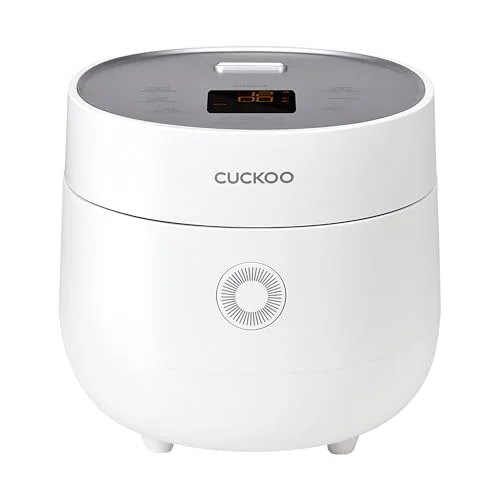
CUCKOO builds the same category of control as the Zojirushi above — fuzzy logic, not a plain switch — into a cooker priced well under it. The listing states the capacity both ways, three cups uncooked and six cooked, so there is no guessing which number is which. Nine cooking modes are listed, along with a quick white-rice cycle CUCKOO times at 26 to 28 minutes, useful for anyone cooking smaller batches more than once a day rather than one big weekly pot. An auto-clean function and a nonstick inner pot round it out. What the listing does not give: wattage, exterior dimensions or a minimum batch size, so treat the half-cup question as untested on this one.

The middle ground for someone who wants micom cooking without paying for the retractable cord and extras.

CUCKOO Micom Fuzzy Logic rice cooker in white
Price
$88.82
Check price →
03Best basic switch, full-size body

Zojirushi 3 Cup Rice Cooker/Steamer (White)

Best for a plain switch cooker at the full 3-cup size

3 cups uncooked·Steamer function·No micom branding

Not every Zojirushi in this comparison is a micom. This one carries the maker’s name but none of the “micom” or “fuzzy logic” language that marks its compact sibling, which points to the simpler end of Zojirushi’s own lineup: a rice cooker and steamer built around a straightforward switch rather than a programmable chip. It still holds the full three cups raw that this size class tops out at, so capacity is not where it compromises — control is. The listing does not state a cooked-cup figure, wattage or dimensions, so size it the same way you would any 3-cup cooker: for two people eating rice regularly, without the micom menus or the delay timer a step-up model adds.

For someone who wants the Zojirushi name and the full 3-cup size without paying for a microchip they may not use.

Zojirushi 3 cup rice cooker and steamer in white
Price
$53.99
Check price →
04Best one-switch value

GreenLife Rice Cooker, One-Switch Design

Best for a PFAS-free pot on a one-switch budget

3 cups uncooked·6 cups cooked·One-Switch Design·Dishwasher-safe parts

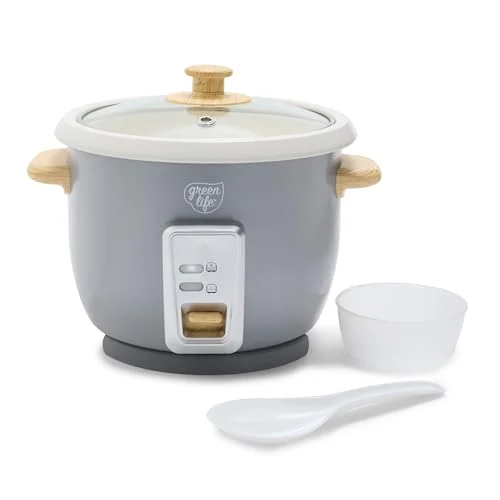
GreenLife states its control method right in the name: One-Switch Design, the same basic cook-and-warm mechanism behind most budget cookers this size. What sets it apart in this lineup is the pot: a PFAS-free ceramic nonstick coating in a removable bowl, which the listing says comes apart for dishwasher-safe cleaning along with the other parts. Capacity is the category standard — three cups raw, six cooked — and keep-warm is included, as it is on every cooker here. There is no delay timer, no menu selection and no micom logic; you start it, it cooks, it switches to warm. For a straightforward 3-cup cooker with an easy-clean pot, it is hard to beat on price.

The one to buy if you want a PFAS-free pot and nothing more complicated than a single switch.

GreenLife rice cooker in gray with ceramic nonstick pot
Price
$27.32
Check price →
05Best budget 3-cup

Aroma Housewares 1.5Qt. Rice & Grain Cooker (ARC-363NGB)

Best for the lowest price at the full 3-cup size

3 cups uncooked·6 cups cooked·1.5-quart body

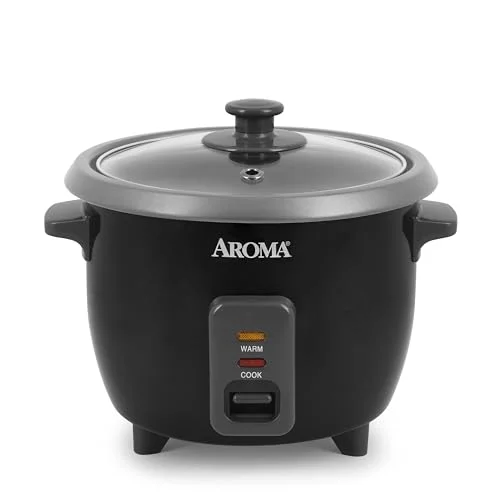
Aroma’s small 1.5-quart cooker states its capacity the same way as GreenLife and CUCKOO — three cups raw, six cooked — at the lowest price in this comparison for that capacity. The listing carries no micom or fuzzy-logic language, consistent with Aroma’s basic small-cooker line, so expect the same cook-and-warm mechanics as the other budget switch cookers here rather than programmable heat stages. It is a rice-and-grain cooker rather than a single-purpose rice pot, per the listing name, though specific grain settings are not detailed. For a household that wants the full 3-cup capacity without paying for extra control, this is the floor on price.

The cheapest way into the full 3-cup size in this lineup.

Aroma Housewares 1.5 quart rice and grain cooker in black
Price
$24.99
Check price →
06Best for one

Dash Mini Rice Cooker, 2-Cup

Best for a single person or a very small kitchen

1 cup uncooked·2 cups cooked·One switch·Keep warm

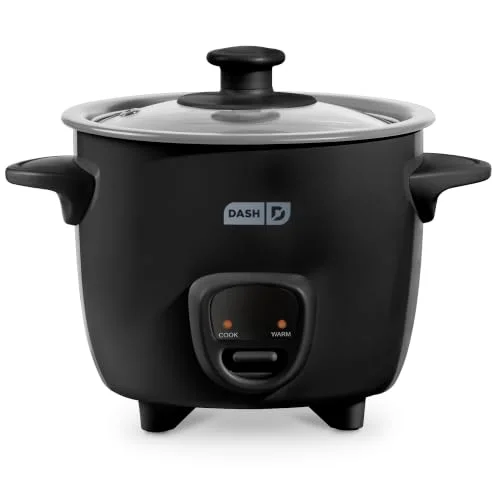
The smallest cooker in this guide by a wide margin, and it does not pretend otherwise: one cup of raw rice in, two cups cooked out, on the listing itself. One switch starts it, an indicator light shows when it is done, and it drops to keep-warm automatically after that. The pot is removable with a ceramic nonstick coating, and Dash markets it for oatmeal, quinoa and other grains beyond rice. It is light and small enough to fit a dorm room, a studio kitchen, an office desk or a suitcase. There is no timer, no brown-rice setting and, with a one-cup ceiling, no real minimum-batch question at all — it only ever makes one size.

Right for one person who eats rice most days and has no counter space to spare.

Dash mini 2-cup rice cooker in black
Price
$19.99
Check price →
Know the ceiling

When a small cooker is too small

The signs

You've outgrown three cups

A 3-cup cooker is sized for a real two-person dinner with a little room for leftovers, not for feeding a third regular eater or for batch-cooking a week’s worth of rice in one pass. If you are routinely topping off the pot for a third or fourth person, running it twice in one evening to keep up, or planning to cook extra specifically to freeze or pack for lunches, the capacity math that works for one or two people stops working. Steaming a vegetable or protein in the same cooker while the rice is going — a feature several step-up models build around — is also harder to do well in a pot designed around a half-cup minimum rather than a full tray.

What to size up to

Move to the family range

Our main guide to the best rice cookers covers the sizes above this one: 5.5 cups raw is the standard for a family of three to five, and 8 to 10 cups raw is built for bigger households and genuine batch cooking. The jump is not just capacity — those sizes are also where induction heating and pressure cooking show up, two features this guide’s cookers do not offer at all. If three cups has started to feel tight more weeks than not, that guide, not a second small cooker, is where to look next.

Our method

How we picked — and what we can’t tell you

What we did

Specs, prices and listing language

We compared published specifications and current Amazon prices for six small-capacity rice cookers, from one cup raw to three. We read every capacity figure twice, to separate the raw number from the cooked one, and we weighted raw capacity and control method — a plain switch versus a micom — above menu counts, which inflate easily. Where a listing states a minimum batch size, as Zojirushi does, we noted it; where a listing is silent on wattage, dimensions or control type, we said so rather than filling the gap with a guess.

What we didn’t

We don’t run a testing lab

We do not physically test these rice cookers, we do not own them, and we publish no scores out of ten. This category has no verified rating data behind it, so this guide carries no star ratings or review counts of any kind — we would rather leave a gap than invent one. How evenly a specific cooker handles its stated half-cup minimum, or how a coating wears after a year of daily use, is beyond anything a listing can tell either of us. What we can do honestly is read every specification closely, compare them side by side, and explain the mechanics behind the numbers.

FAQ

Common questions

Is a 3-cup rice cooker big enough for two people?

For most two-person households, yes. Three raw cups is roughly six cooked, going by the doubling this category of cooker uses, which comfortably covers a dinner serving for two with enough left for a second helping or next-day leftovers. It is not sized for batch cooking a week of rice in one pass, or for a third regular eater joining most meals — at that point, the 5.5-cup size built for families is the better fit.

What does "uncooked" vs. "cooked" cups mean on a small rice cooker?

Rice roughly doubles in volume as it cooks, and small-cooker listings state capacity using one number or the other. Dash spells out both on its listing: one cup uncooked, two cups cooked. GreenLife, Aroma’s 1.5-quart cooker and CUCKOO’s micom all use three cups uncooked, six cups cooked. Zojirushi’s two 3-cup cookers list only the raw figure. The raw number is the one that tells you how much dry rice the pot actually holds before water goes in — read that one first.

Is a micom rice cooker worth it in a compact size?

If you cook rice most days, often. A micom — a microchip running fuzzy-logic control — adjusts the heat through soaking, cooking and resting instead of just running until the water disappears, which shows up most with brown rice, mixed grains and small or unusual batches. CUCKOO and Zojirushi both put this control inside a 3-cup body in this comparison, at different prices. GreenLife, Aroma and Dash use a simpler cook-and-warm switch instead, which costs less and asks nothing of you beyond pressing start.

Can a small rice cooker make less than a cup of rice?

It depends on the model, and few listings say either way. Zojirushi states that its compact 3-cup micom can cook as little as half a cup of rice or oats, a minimum that stands out because almost nothing else in this comparison publishes one. The other cookers here give no stated floor, so treat their 1- or 3-cup raw figures as a ceiling the listing supports, not a guarantee of how evenly the pot handles a much smaller batch. Dash’s one-cup mini avoids the question by only ever making one size.

Keep reading

More from Best Rice Cookers Guide

The full lineup

The 6 Best Rice Cookers

Our main, research-based comparison across every size and heating method, from basic switch cookers to induction and pressure induction.

Browse

All guides

Every comparison and buying guide we’ve published, in one archive. See also our about page for how we research, and contact us with questions or corrections.